

Implication of US GENIUS Act
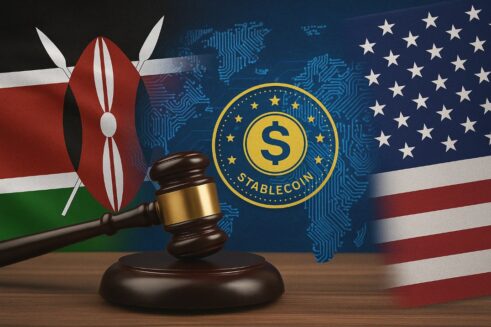
The recently enacted Global Enhancing National and International Unified Standards (GENIUS) Act in the United States marks a significant shift in how cross-border crypto regulation may evolve. For Kenya’s digital asset ecosystem where innovation thrives but regulatory certainty remains elusive the GENIUS Act signals a need to rethink how we position crypto ventures for global compliance, enforcement cooperation, and reciprocal recognition.
“It means you’re on your toes and you’re aware of the problem,” says Andrew Buck, business lawyer at Avvocato Law in Winnipeg.”
1. Inventory your data
Inventories aren’t just for tangible goods. All businesses should inventory their data, too.
“How could you possibly understand the extent of the problem if you don’t know what information you have in the first place?” Andrew asks.
What Is the GENIUS Act and Why Should Kenya Care?
The GENIUS Act aims to harmonize digital asset regulation by setting a framework for cross-border enforcement, asset tracking, and classification of digital tokens. While U.S. law doesn’t directly apply in Kenya, the Act sets a global tone that will influence regulatory bodies such as the Financial Action Task Force (FATF), the International Organization of Securities Commissions (IOSCO), and inevitably, Kenya’s Capital Markets Authority (CMA) and Central Bank (CBK). For Kenyan crypto projects with global ambitions or even wallet or DeFi platforms servicing U.S. or EU clients alignment with emerging international norms is no longer optional.
Securitization vs Stable coins: Unpacking the Legal Debate
A key aspect of the GENIUS Act is the classification framework for digital assets. While many regulators lean toward treating some tokens as securities, the Act separates stable coins from both securities and commodities.
This matters greatly in Kenya, where fintechs often conflate tokenized assets with equity-based products. A stable coin, backed by a reserve of fiat or algorithmically balanced, is primarily a payment mechanism, not a promise of profit or a claim to an underlying company. As such, securitizing stable coins distorts their nature and opens up exposure to securities laws including licensing, disclosures, and investor restrictions.
For founders, the key risk lies in marketing a stable coin with implied profit expectations or as part of an investment scheme. That crosses the line into securities territory, triggering CMA jurisdiction.
Asset Seizure and Freeze: Global Enforcement Is Coming
Another significant piece of the GENIUS Act is the enforcement framework allowing asset seizure or freeze orders across jurisdictions. Through data-sharing protocols and mutual recognition, jurisdictions with enabling legislation may request local regulators or courts to enforce such orders.
For Kenyan exchanges, wallets, or crypto escrow platforms, this means that foreign governments could, in the future, seek enforcement of freeze orders on user assets held locally if reciprocal legislation is passed. Without clear Kenyan laws, this creates a compliance vacuum and increases risk for platforms handling cross-border flows.
The Case for Reciprocal Agreements and Legal Clarity in Kenya
Kenya’s sandbox regime and the CMA’s draft digital asset framework are progressive steps but the GENIUS Act raises the stakes. Countries like the U.S., Singapore, and the UAE are creating infrastructure for legal cooperation. Kenya must follow suit or risk becoming a grey-zone for crypto enforcement. Reciprocal recognition treaties, if pursued, could protect Kenyan crypto companies from arbitrary enforcement abroad and also strengthen domestic consumer protection by enabling Kenya to act against foreign bad actors.

Future-Proofing Kenya’s Crypto Sector
The GENIUS Act is a wake-up call for Kenya’s crypto ecosystem. To build compliant, borderless products, Kenyan fintech founders need to understand global classification standards, avoid accidental securitization of stable coins, and prepare for cross-border enforcement norms. Let’s discuss clarity to the navigation of these legal complexities and structure products that scale globally without tripping regulatory wires. eddah@ekcadvocates.com
The best law firm in NYC! They explain everything to you and they are very generous and helpful. The lawyers are excellent and very respectful. I highly recommend the Avvocato law firm.